

How Digital Marketing Helps E-commerce Businesses Increase Sales and Grow Online
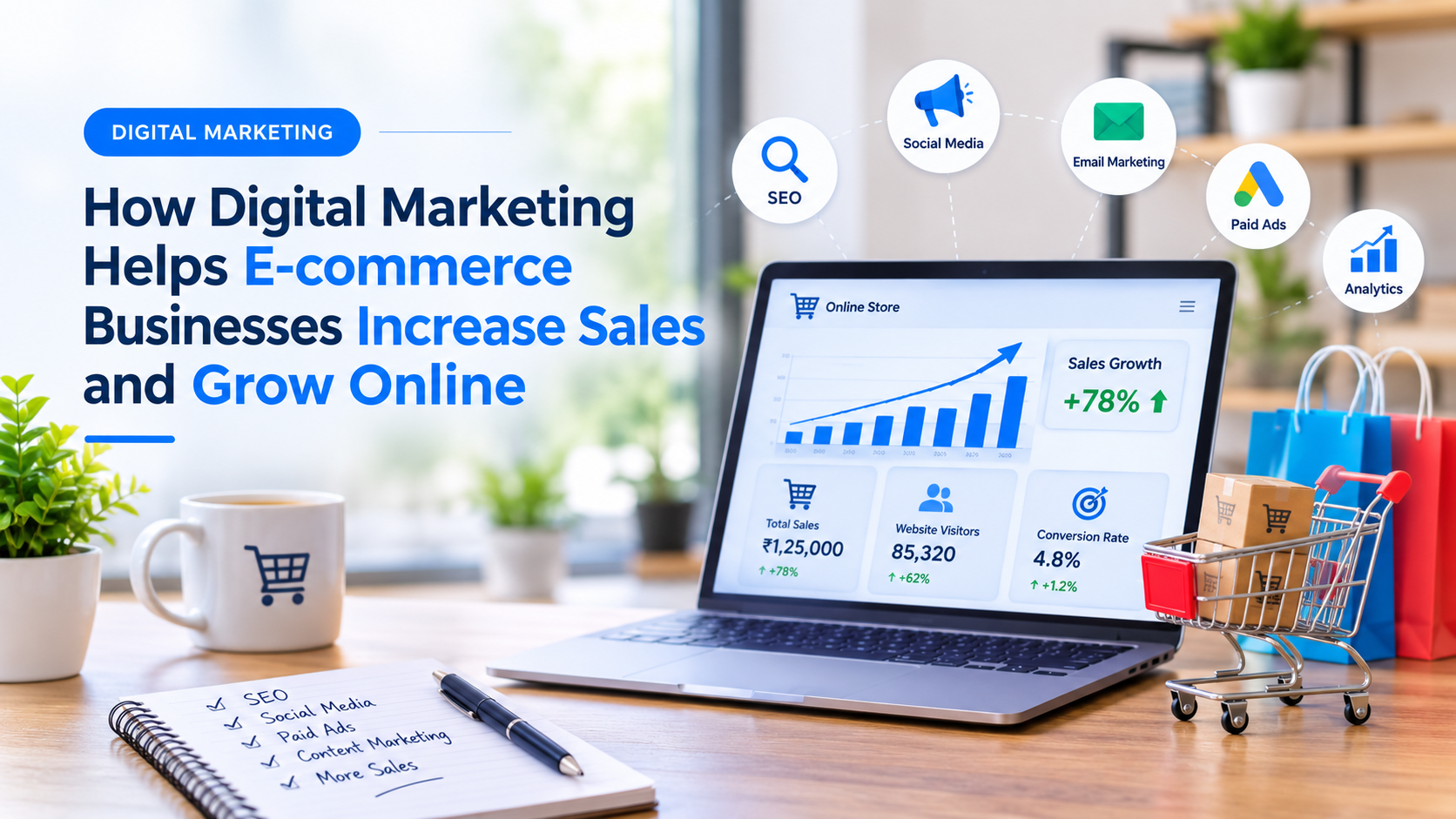
The e-commerce industry has transformed how businesses sell products and connect with customers. However, launching an online store is only the first step toward building a successful online business. To stand out in a competitive marketplace, businesses need a well-planned digital marketing strategy that attracts the right audience, builds brand credibility, and converts visitors into customers.
Digital marketing enables e-commerce businesses to reach potential buyers through search engines, social media platforms, paid advertising, email campaigns, and content marketing. When these channels work together, businesses can strengthen their online presence, improve customer engagement, and create opportunities for sustainable growth.
At Aalzatech Software Solutions, we recognize the importance of combining digital solutions with effective online marketing strategies to help businesses strengthen their digital presence and achieve their business objectives.
Search Engine Optimization for Better Online Visibility
Search Engine Optimization (SEO) plays a significant role in helping e-commerce websites appear in relevant search engine results. When potential customers search for products, optimized product pages and useful website content can help businesses attract relevant organic traffic.
An effective e-commerce SEO strategy includes:
Keyword research based on customer search intent.
Optimizing product titles, descriptions, and category pages.
Improving website loading speed and mobile usability.
Creating informative blogs and buying guides.
Improving internal linking and website structure.
Monitoring indexing and technical SEO performance.
A consistent SEO strategy can strengthen search visibility over time and help businesses reach customers actively looking for their products.
Paid Advertising to Reach Potential Customers
Paid advertising allows e-commerce businesses to promote products to targeted audiences through platforms such as Google Ads and Meta Ads.
Google Ads can help businesses reach users searching for relevant products, while social media advertising can introduce products to potential customers based on available audience targeting options.
Businesses can use paid campaigns to promote new product launches, seasonal offers, best-selling products, and special promotions.
To improve campaign performance, businesses should monitor conversion rates, customer acquisition costs, advertising expenditure, and return on ad spend (ROAS). Accurate conversion tracking is essential for making informed advertising decisions.
Social Media Marketing to Build Brand Awareness
Social media platforms provide e-commerce brands with opportunities to showcase products, communicate their brand values, and engage with potential customers.
A professional social media strategy may include product demonstration videos, educational posts, customer testimonials, product comparisons, and promotional campaigns.
Consistent content helps customers understand the benefits and features of products before making a purchase decision. Social media can also support customer service by providing a channel for questions, feedback, and product enquiries.
The objective is to create meaningful engagement while guiding interested audiences toward the online store.
Content Marketing to Educate and Engage Customers
Content marketing helps e-commerce businesses provide useful information throughout the customer journey. Customers often compare products, evaluate features, and research alternatives before purchasing.
Publishing relevant content can help businesses answer these questions and establish credibility within their industry.
Effective content formats include:
Product comparison articles.
Detailed buying guides.
Frequently asked questions.
Product tutorials and demonstration videos.
Industry insights and practical recommendations.
High-quality content supports customer decision-making and creates additional opportunities to attract organic traffic through search engines.
Email Marketing to Encourage Repeat Purchases
Acquiring a new customer can require considerable marketing investment. Email marketing helps businesses maintain relationships with existing customers and encourage repeat purchases.
E-commerce brands can use email campaigns to announce new arrivals, share relevant product recommendations, communicate exclusive offers, and provide useful post-purchase information.
Automated messages may also support order updates, abandoned-cart reminders, and customer re-engagement, depending on the available platform and customer consent.
Personalized and relevant communication can improve the customer experience and support long-term customer retention.
Website Optimization to Improve Conversion Rates
Digital marketing generates opportunities to bring visitors to an online store, but the website experience influences whether those visitors complete a purchase.
A well-optimized e-commerce website should offer clear product information, high-quality images, transparent pricing, accessible navigation, and a straightforward checkout process.
Important areas to evaluate include:
Mobile responsiveness and page speed.
Product descriptions and images.
Clear calls to action.
Secure and convenient payment options.
Shipping, returns, and refund information.
Customer reviews and trust indicators.
Improving these elements can reduce unnecessary friction during the buying process and create a more convenient shopping experience.
Data Analytics for Measurable Business Growth
Data-driven marketing helps e-commerce businesses understand which activities contribute to their business objectives.
Analytics tools can provide insights into website traffic, customer behaviour, campaign performance, and purchase patterns.
Key performance indicators include:
| Metric | What It Measures |
|---|---|
| Conversion Rate | The percentage of visitors who complete a desired action. |
| Customer Acquisition Cost (CAC) | The average cost of acquiring a customer. |
| Return on Ad Spend (ROAS) | Revenue attributed to advertising relative to advertising expenditure. |
| Average Order Value (AOV) | The average value of customer orders. |
| Customer Retention Rate | The proportion of customers retained over a defined period. |
Regular performance analysis enables businesses to identify opportunities, allocate marketing budgets more effectively, and refine their strategies based on measurable results.
Integrating Digital Marketing With Business Technology
Marketing performance can improve when digital marketing activities are supported by suitable business technology. E-commerce platforms, customer relationship management (CRM) systems, analytics tools, and marketing automation can help businesses manage customer interactions and organize their sales processes.
For example, integrating customer enquiries with a CRM system can help teams track follow-ups, manage leads, and maintain customer communication records. Automated workflows can also reduce repetitive tasks and improve operational efficiency.
Selecting the right combination of technology and marketing processes depends on the business model, customer journey, and operational requirements.
Conclusion
Digital marketing is an important component of e-commerce growth. From improving search engine visibility and generating targeted traffic to optimizing website conversions and strengthening customer retention, each marketing activity contributes to a different stage of the customer journey.
The most effective approach combines SEO, paid advertising, social media marketing, content creation, email campaigns, website optimization, and performance analytics within a unified strategy.
For e-commerce businesses, long-term success depends on understanding customer needs, measuring results, and continuously improving the online shopping experience.
Aalzatech Software Solutions helps businesses explore digital and technology solutions aligned with their operational needs and growth objectives.
Frequently Asked Questions
1. How does digital marketing help e-commerce businesses?
Digital marketing helps e-commerce businesses improve online visibility, attract relevant visitors, promote products, generate sales opportunities, and build long-term customer relationships.
2. Which digital marketing strategies are effective for e-commerce?
SEO, paid search advertising, social media marketing, content marketing, email marketing, and website conversion optimization are commonly used strategies. The right combination depends on the business's objectives and target audience.
3. Why is SEO important for an e-commerce website?
SEO helps search engines understand product and category pages, potentially improving their visibility for relevant searches and attracting organic traffic.
4. How can e-commerce businesses improve their online sales?
Businesses can improve sales opportunities by optimizing product pages, simplifying checkout, using relevant advertising campaigns, providing clear product information, and analyzing customer behaviour.
5. How long does digital marketing take to show results?
Paid advertising can generate traffic soon after campaigns launch, while SEO generally requires sustained effort over time. Results vary depending on competition, budget, website quality, and campaign execution.
Ready to Strengthen Your Digital Presence?
Discover how technology and digital strategies can support your business goals with Aalzatech Software Solutions. Visit www.aalzatech.com to learn more about our solutions and discuss your business requirements.
Contact Us